
What is Structural Investigation?
A structural investigation is a detailed assessment of a building’s physical structure — its foundations, reinforcement, masonry, and materials.
The purpose is to understand how the structure was built, how it’s performing, and whether it remains safe for continued or altered use.
These investigations are often required when drawings are missing or outdated, when visible damage raises concern, or before major redevelopment or change-of-use projects.
By identifying hidden defects or verifying structural details, we help engineers and designers make informed decisions that ensure safety and compliance.
How We Carry Out Our Investigation?
Every project begins with a tailored scope of works and site-specific risk assessment.
From there, our experienced engineers and technicians employ a combination of
non-destructive and intrusive methods, depending on access and objectives.
Our work commonly includes:
Carefully exposing foundations to record size, depth, and condition.
Extracting concrete cores for strength testing and chemical analysis.
Locating and identifying reinforcement using rebar scanners or GPR.
Sampling bricks, mortar, or steel for laboratory testing.
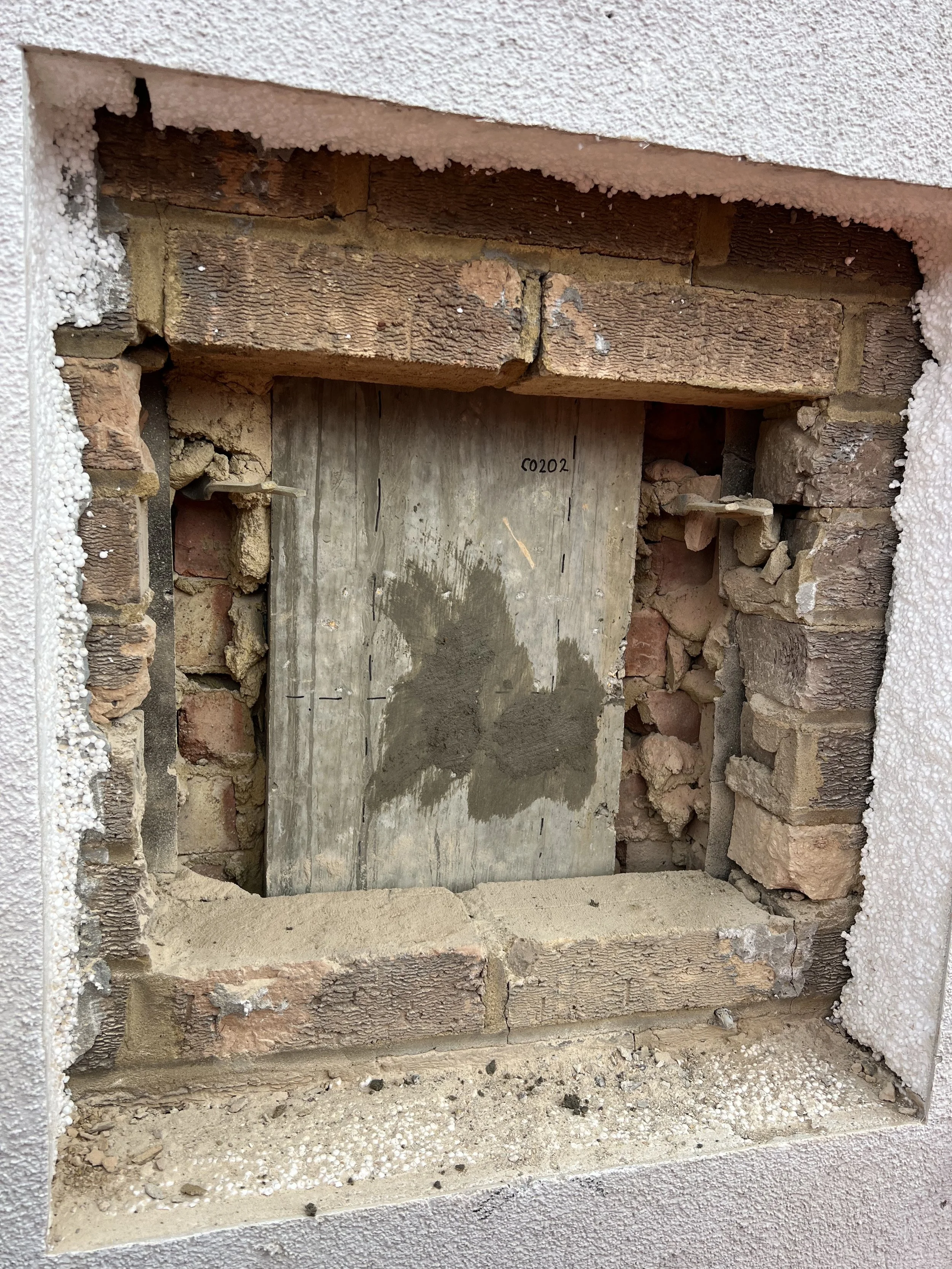
Opening up sections of floors, walls, or ceilings to verify beam sizes, connections, and materials.
Each investigation is documented with clear photographs, sketches, and notes, forming a complete record of findings for engineers, designers, and clients.
Who Requires Structural Investigations?
Our services support a wide range of professionals and organisations:
Structural and civil engineers seeking accurate data for design and verification.
Architects and developers planning refurbishments or alterations.
Property owners and landlords needing assurance of safety and stability.
Local authorities and insurance providers investigating damage, settlement, or compliance issues.
Why Is Structural Investigation Essential?
A professional structural investigation removes uncertainty. It can reveal unseen issues such as corrosion, cracking, inadequate reinforcement, or material deterioration long before they become costly or unsafe.
It also provides the factual evidence required for structural design, safety certification, insurance assessments, and conservation work.
Ultimately, it’s an investment in risk reduction, long-term durability, and project success.
Why Choose TS Site Investigation
We combine geotechnical expertise with hands-on structural experience to deliver investigations that are both technically robust and practically efficient.
Our teams are trained for live and restricted-access environments, using the latest tools for scanning, sampling, and documentation. Every report is clear, professional, and ready to integrate into your design or engineering process.
FAQs
-
Scanning tools such as GPR and rebar locators are useful, but they cannot always confirm:
bar diameters
concrete condition
corrosion
exact reinforcement spacing
foundation construction
hidden defects
Intrusive investigations physically expose the structure, providing 100% accurate, verifiable data that scanning alone cannot achieve.
Engineers often require an intrusive structural investigation when visual inspections alone are not enough to design, certify, or verify the building safely.
-
s. Structural investigations provide the actual load-bearing capacity information engineers need to assess whether a structure can safely support:
additional storeys
new equipment or plant
renovations or extensions
increased imposed loads
changes in building use
The collected data (foundation sizes, reinforcement details, material strength, connection types) allows engineers to complete accurate load calculations and confirm structural adequacy.
-
Absolutely. Older buildings often have no as-built drawings or have undergone undocumented alterations.
Intrusive investigations allow us to:identify the original construction method
determine the materials used
confirm whether the structure has been altered
locate hidden structural elements and load paths
assess deterioration or long-term movement
This information is essential when refurbishing, extending, or repurposing older properties.